
往昔異鄉|台灣野鳥/桐花季/棒球經典賽/小提琴家/黃荊
Wild Birds of Taiwan/Tung Blossoms/World Baseball Classic/Violinist/Vitex negundo
作者:蔡玉珊 Yushan Tsai
創作年份:2025-2026
織帶作品介紹 Showcase of Woven Band Creations
- 臺灣野鳥 Wild Birds of TAIWAN
- 桐花季 Tung Blossom Season
- 2024 世界棒球經典賽 2024 MBSC Premier 12
- 小提琴家 Violinist
- 黃荆(植物) Vitex Negundo (plant)
卡片梭織簡介: Introduction to Tablet Weaving
這裡展示的所有織帶都不是織布機織造的,而是運用一種古老的紡織技法——如今被稱為「卡片梭織」織作而成。卡片梭織曾廣泛流傳於世界許多早期文明,包括北非、中亞、歐洲、冰島以及亞洲部分地區。儘管人們常常誤以為卡片梭織是織布機織造的前身,但兩者在技術原理和結構體系上都存在根本性的差異。
卡片梭織發展成為一種獨立的紡織傳統,擁有其獨特的工藝、歷史和文化意義。
縱觀歷史,卡片織帶的用途十分廣泛。在古代社會,人們用它們製作牲畜的皮帶、挽具和拴繩。到了中世紀,它們演變為精美絕倫的裝飾飾帶,點綴著歐洲貴族和神職人員的華貴服飾。如今,當代纖維藝術家們仍在運用這項技法,透過創新的紡織藝術探索其豐富的創作潛力。
從中世紀到文藝復興時期,織帶工藝在歐洲蓬勃發展,達到了技藝和藝術造詣的巔峰。然而,隨著工業革命的到來,這項工藝逐漸衰落,並在接下來的幾個世紀中幾乎被遺忘。直到19世紀末,德國學者瑪格麗特·萊曼-菲爾赫斯發表了她開創性的研究,重新喚起了人們對織帶工藝的興趣。她的研究證明,考古學家發掘出的穿孔的卡片其實就是用來編織這些古代織帶的工具。她的工作為織帶工藝的現代復興奠定了基礎。織帶片的形狀多種多樣,包括正方形、長方形、三角形和六邊形,每種形狀都提供了獨特的結構可能性和圖案編織方法。這次展出的五件作品多由四十片正方形卡片編織而成,每片織帶片上都鑽有四個孔。考古發現的卡片由木頭、角、骨頭和皮革製成。現代織造者通常使用厚紙板、壓克力板或竹板。經線穿過一系列織片的孔洞並繃緊後,織卡片前後翻轉,同時穿入緯線。透過控制織片的旋轉,可以織出種類繁多的幾何圖案、紋理和編織結構。
卡片梭織的真正精妙之處在於,它只用最簡單的工具就能織出複雜精巧的設計。即使在今天,卡片梭織片的織帶也沒有採用機器進行商業化生產。每一條織帶都完全由手工編織而成,保留了手工紡織品獨有的微妙紋理、豐富的觸感和溫暖的質感。
None of the woven bands presented here were produced on a loom. Instead, they were created usingan ancient textile technique known today as tablet weaving (also called card weaving).
Tablet weaving was practiced across many of the world's early civilizations, including North Africa,Central Asia, Europe, Iceland, and parts of Asia. Although often mistaken for a precursor to loomweaving, the two are fundamentally different in both their technical principles and structural systems.
Tablet weaving developed as an independent textile tradition with its own methods, history, and cultural significance.
Throughout history, tablet-woven bands have served a remarkable range of purposes. In ancient societies, they were used to make straps, harnesses, and tethers for livestock. By the Middle Ages, they had evolved into exquisitely woven decorative trims that embellished the luxurious garments of European nobility and the clergy. Today, contemporary fiber artists continue to embrace the technique,
exploring its rich creative potential through innovative textile art.
Tablet weaving flourished in Europe from the medieval period through the Renaissance, reaching an exceptional level of technical and artistic refinement. With the advent of the Industrial Revolution, however, the craft gradually declined and remained largely forgotten for several centuries. Interest was rekindled in the late nineteenth century when the German scholar Margarethe Lehmann-Filhés
published her groundbreaking research, demonstrating that the perforated tablets unearthed by archaeologists were, in fact, the tools used for weaving these ancient bands. Her work laid the foundation for the modern revival of tablet weaving.
Weaving tablets have been made in a variety of shapes—including square, rectangular, triangular, and hexagonal forms—each offering distinct structural possibilities and patterning methods. Most of the five works exhibited here were woven using forty square tablets, each pierced with four holes.
Archaeological examples of weaving tablets have been found fashioned from wood, horn, bone, and leather. Modern practitioners commonly use heavy card, acrylic, or bamboo. After the warp threads are passed through the holes of a series of tablets and placed under tension, the tablets are turned forward and backward while the weft thread is inserted. Through the controlled rotation of the tablets,
an extraordinary range of geometric patterns, textures, and woven structures can be achieved.
What makes tablet weaving truly remarkable is its ability to produce intricate and sophisticated designs with only the simplest of tools. Even today, tablet-woven bands have not been commercialized through machine production. Every band is woven entirely by hand, preserving the subtle irregularities, rich texture, and warmth that are unique to handcrafted textiles.
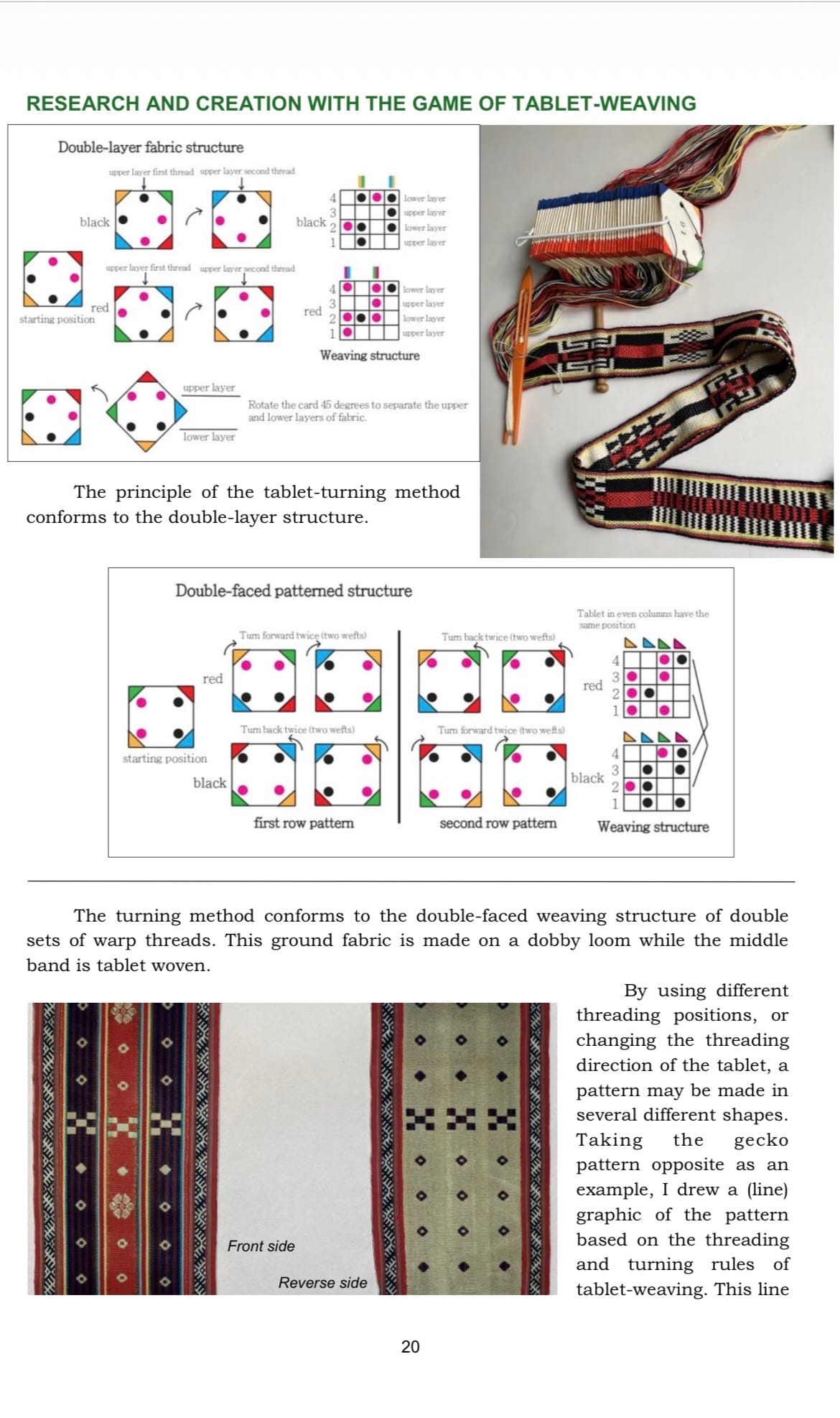
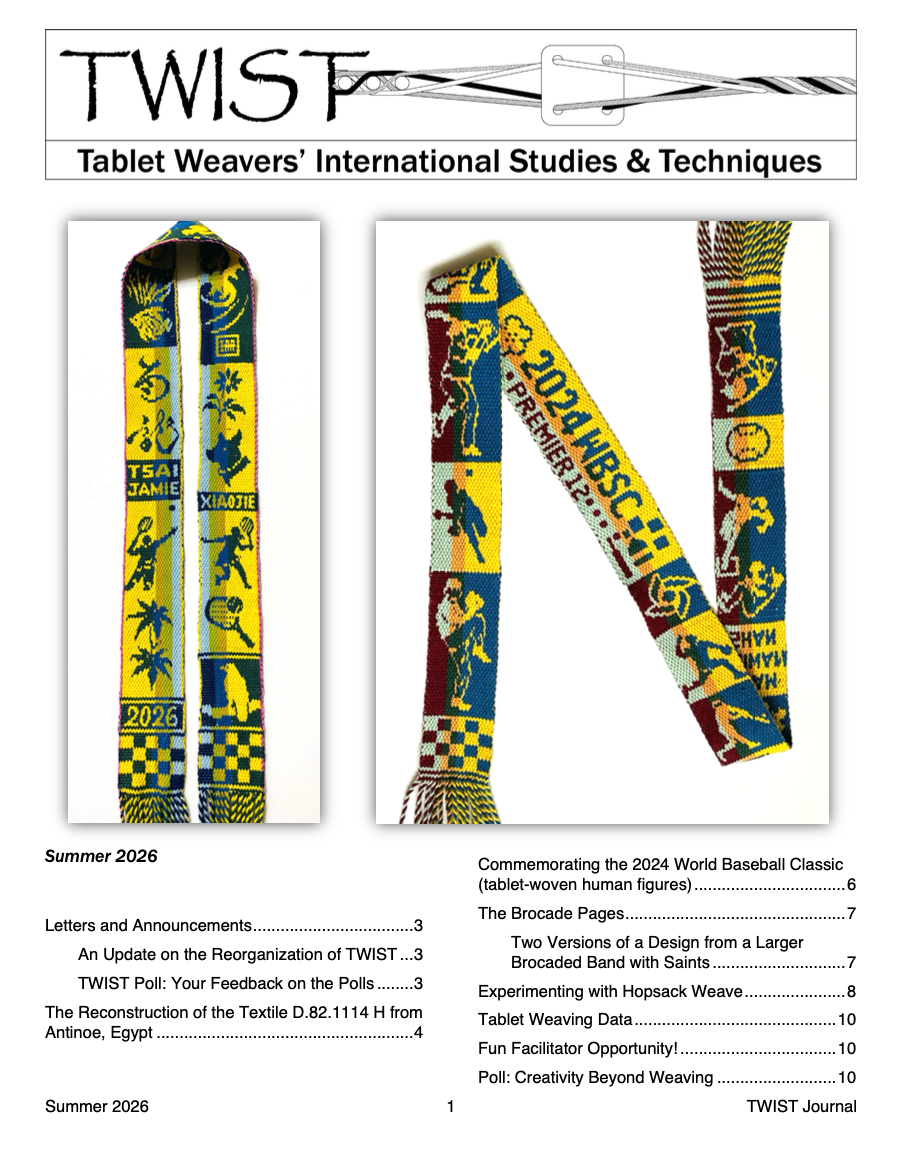
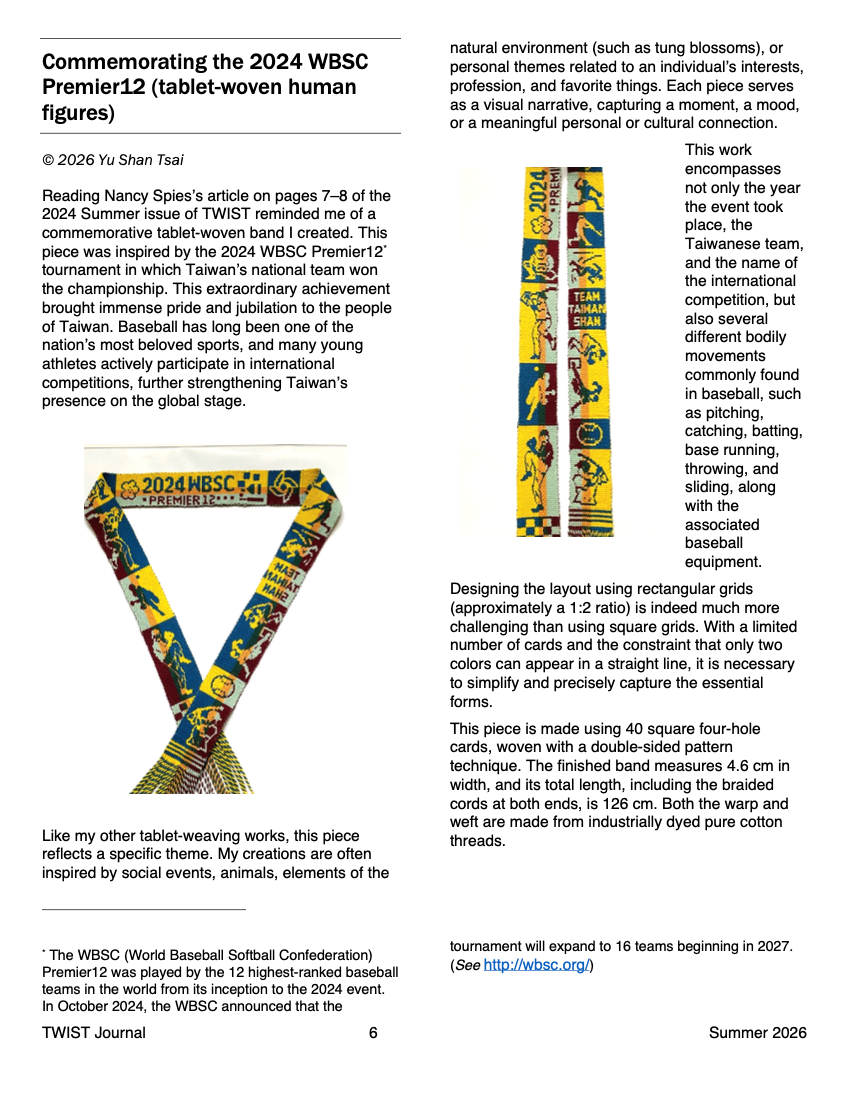
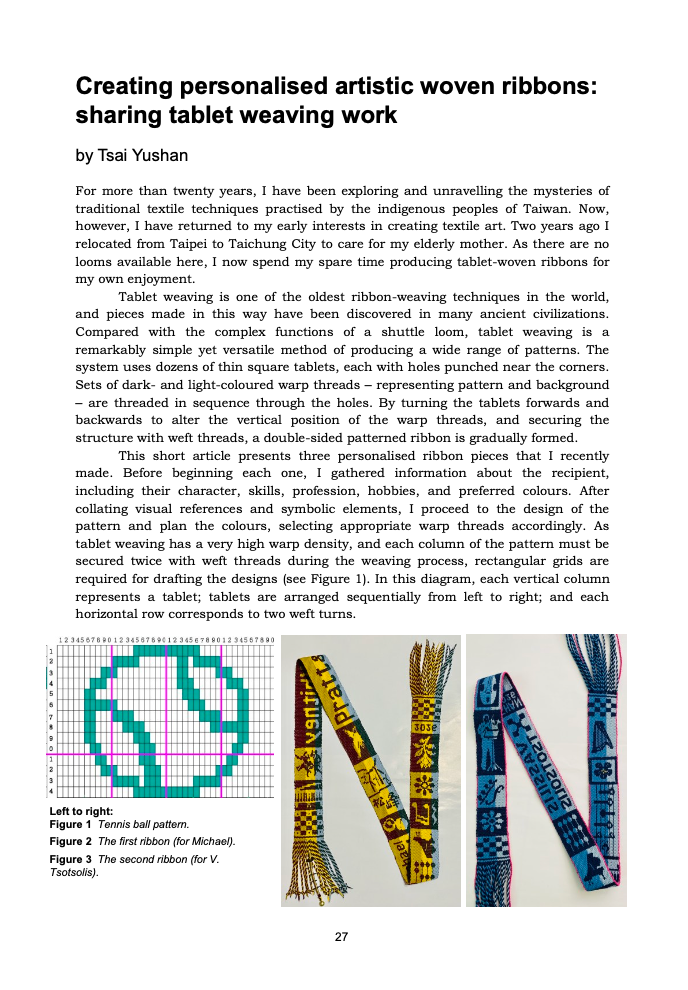
Image Resource
蔡玉珊(2024)。〈卡片梭織(Tablet Weaving)〉。《Oxford Asian Textile Group》。
Tsai, Y.-S. (2025). Vitex negundo . TWIST: Tablet Weavers' International Studies & Techniques.
蔡玉珊(2026)。《Asian Textiles》(Summer 2026)。